
Debunking the Shrine Fire Panic

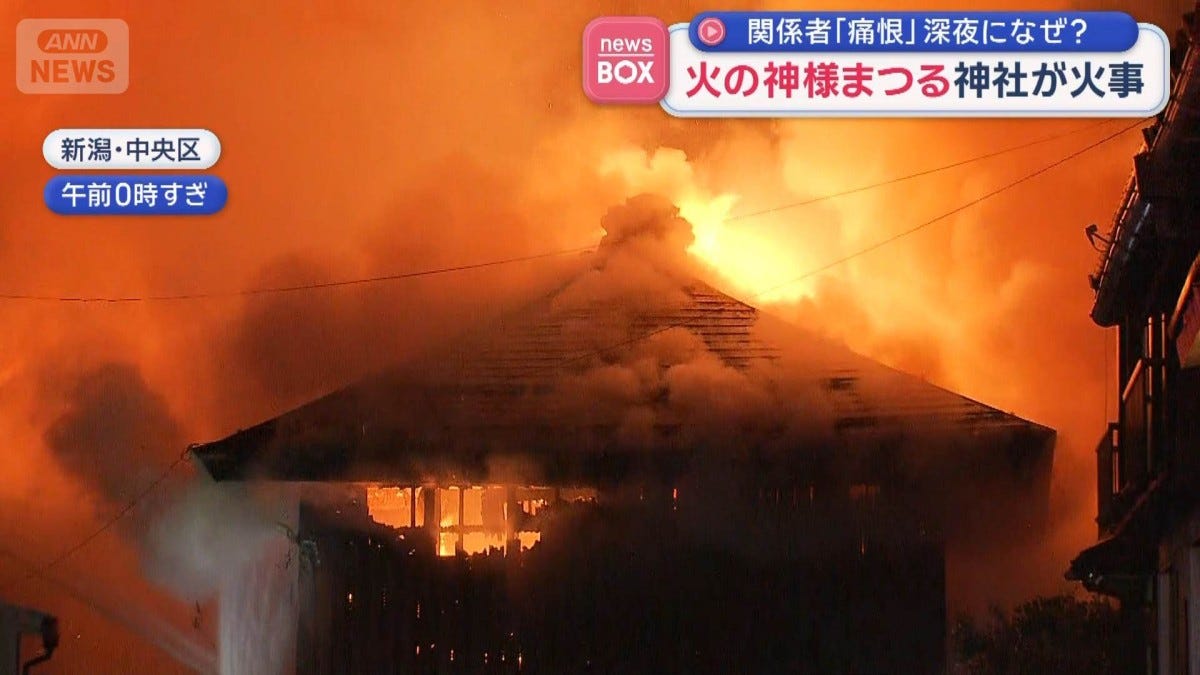
In the last few days, I’ve seen people on Twitter claiming that Japanese shrines and temples are burning down at an unprecedented, never-before-seen rate. While they do not say it outright, the wording, framing, and audiences involved often seem to indirectly point fingers at “immigrants,” “politically or religiously motivated attacks,” and similar narratives.
However, there is no basis to these claims, and if you look at simple context and data, you will find that this is false.
The Claim

What many of these posts argue is that the fires are “too spontaneous” and too frequent to be a coincidence, implying that there must be some hidden or malicious force behind them. While the posters often avoid stating it directly, their audiences are quick to connect the incidents to immigration or politically/religiously motivated attacks, despite there being no evidence to prove such claims. Below are some examples:

The Truth
Japanese temples and shrines are extremely prone to fire, as many are traditionally built almost entirely from wood and contain old, highly flammable materials. Many sites also rely on aging electrical systems, exposed wiring, candles, incense, heating equipment, and densely packed wooden interiors, all of which increase fire risk. The Japanese government itself has acknowledged this issue and launched a nationwide program after the 2019 Shuri Castle fire in Okinawa to strengthen fire prevention measures for cultural properties across the country.
The most recent case was the fire at Atago Shrine in Niigata City three days ago. According to reports, a shrine priest stated, “We turn off all the lights and switches. I don’t think there was a short circuit,” and “There are absolutely no bonfires at the shrine.” These comments became a major reason why many online began suspecting arson.
However, electrical fires can still occur even when the power is off, such as in tracking fires caused by dust, moisture, or deteriorated wiring.
Most importantly, the priest’s comments should not be treated as an official conclusion. Police are still investigating the exact cause of the fire.
I also did a quick review of the previous six fires commonly shared in these posts, and none of them were concluded to be arson. Most news reports simply ended with “police are still investigating,” with no major follow-up updates afterward. If any of these cases had actually been confirmed as politically or religiously motivated arson attacks, it would have been national headline news across Japan.
If you’re still not convinced, then I’m sure this one will.
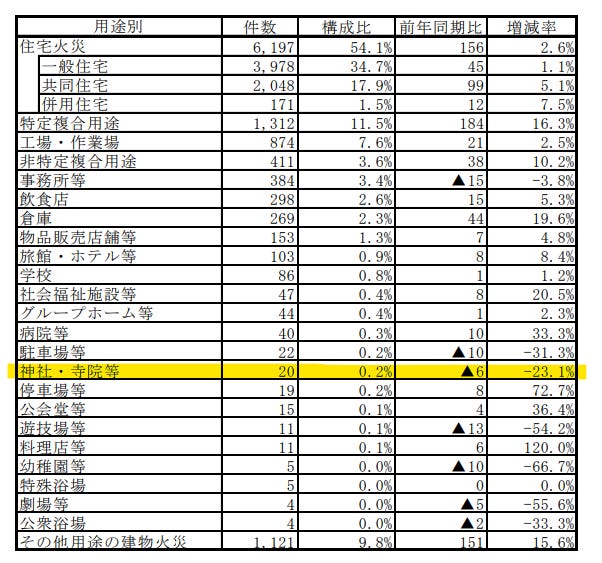
This is a data from the Fire and Disaster Management Agency showing detailed statistics on fire incidents across Japan from January to June 2025.
From January to June 2025, there were 20 fires involving shrines and temples nationwide. Yet this year, there have only been seven so far. In other words, the number of incidents is actually on track to go DOWN, not explode into some “unprecedented crisis” like people online keep claiming, unless 14 more fires magically happen within the next 30 days.
Of the 20 shrine and temple fire incidents recorded in 2025, only one was confirmed to have been caused by arson. Even if all seven fires this year were somehow determined to be arson, which has not been established, that would amount to a 600% increase. This extraordinarily large jump would be impossible to ignore or quietly cover up if true, but it isn’t.
Conclusion
The claim that Japanese shrines and temples are suddenly being targeted in an unprecedented wave of suspicious fires is not supported by the available data, official statements, or ongoing investigations.
Verdict: FALSE.
Greatly appreciate your integrity in this post. As a American from a Muslim background I've had the displeasure of seeing these types of coordinated attacks blaming Muslims for governmental mismanagement. I have maintained that we will have the conversation when we have our first Muslim suspect but I've yet to see evidence of this.
Good piece as usual. Glad folks are calling out COG, though its hard to make your voice heard when dramatic posts or news about foreigners or migrants gets all the clicks.